Important Update: Any service related requests will be temporarily unavailable for planned maintenance from 7:00 PM on 8th October 2026 to 9:00 AM on 9th October 2026

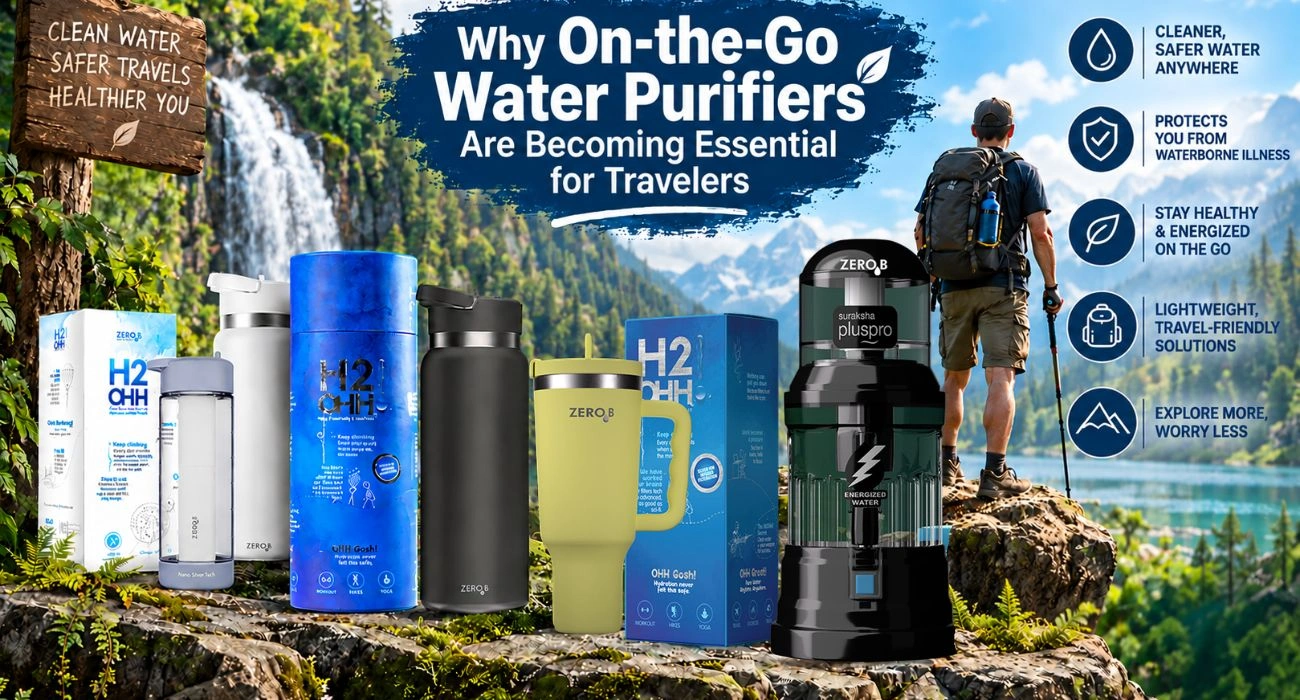
Why On-the-Go Water Purifiers Are Becoming Essential for Travelers

On-the-Go Water Purifier for Travelers India

Five years ago, packing for a trip meant grabbing bottled water at the airport and hoping for the best at every stop after that. Today, more people are reaching for a portable water purifier for travelers instead. Rising awareness of water contamination, plastic waste, and simple convenience is turning the on-the-go water purifier from a niche trekking accessory into everyday travel gear.


Why Travelers Need a Portable Water Purifier Today

Water quality is rarely consistent across a trip. A hotel tap in one city may be perfectly safe, while a station or roadside stop two hours away isn’t. Bottled water helps, but it isn’t foolproof either: seals get tampered with on popular tourist routes, and it simply isn’t available at every altitude or in every village. This is exactly why travelers need a portable water purifier: it removes the guesswork, giving you a consistent, filtered source of water regardless of what’s on tap.

A travel water purifier bottle also solves a cost problem. A traveler drinking three litres a day for two weeks can easily spend several thousand rupees on bottled water alone, money a reusable purifier bottle recovers within the first few days of a trip.

Why On-the-Go Water Purifiers Are Becoming the Default Choice

A few years ago, safe travel hydration meant carrying bulky camping filters or stockpiling bottled water. That’s changing fast, and a few trends explain why the on-the-go water purifier has moved from niche to mainstream:

  • Bottle-style convenience: modern purifier bottles look and pack like a regular water bottle, no separate filtering step, no extra gear to carry.
  • Growing plastic-waste awareness: India consumes an estimated 5.6 billion plastic water bottles a year; more travelers are actively choosing reusable alternatives.
  • Wider and more affordable choice: portable water filtration systems that once cost a premium are now accessible to the average traveler, not just serious trekkers.
  • More travel to smaller towns and rural India: as domestic tourism grows beyond metro cities, travelers increasingly land in places where water quality is untested or inconsistent.
  • Health-consciousness post-pandemic: more travelers actively check what they’re drinking rather than assuming it’s fine.

How Portable Water Filters Work for Travelers

Most travel purifier bottles use a compact, multi-stage cartridge built into the bottle itself. Activated carbon removes chlorine, sediment, and bad taste, while a hollow fiber or ultrafiltration membrane physically blocks bacteria and other microorganisms as water passes through. There’s no waiting, no separate purification step, and no electricity involved: you fill the bottle from any source and the portable water filtration system does its work as you drink.

Can Portable Water Purifiers Remove Bacteria?

Yes, this is the core job of a quality portable water filter bottle. Membranes rated at 0.1-0.2 microns physically trap bacteria such as E. coli and Salmonella, along with protozoa like Giardia, before the water reaches you. Viruses are considerably smaller and need a finer-rated filter or an additional purification stage, so it’s worth checking a product’s specifications if you’re heading somewhere with a higher risk of viral contamination.

What Are the Benefits of Portable Water Purifier Bottles?

  • Safe water on demand, from almost any tap or source, without needing to locate a shop.
  • Lower cost over a trip compared to buying bottled water at every stop.
  • Far less single-use plastic, a real consideration for eco-conscious travelers.
  • No electricity, batteries, or boiling required.
  • Lightweight and compact enough to fit in a day bag alongside everything else.
  • One less thing to worry about in an unfamiliar destination.


Read More: Purifier Tumbler vs Regular Bottle: What Makes It Better?

What Is the Safest Way to Drink Water While Traveling?

The safest approach is layered: use a filtered water bottle for travel as your default for taps, hotels, and stations, and add purification tablets when you’re relying on untreated natural sources such as streams on a trek. Avoid ice cubes of unknown origin, be cautious with bottled water seals in busy tourist areas, and rinse your purifier bottle daily so it keeps performing as expected. For off-grid stays or rural homestays without a reliable tap, a non-electric gravity purifier like ZeroB Suraksha Lite is a useful backup for the whole group.

Travel Tips for Safe Drinking Water

  • Carry a portable water filter bottle instead of depending on bottled water being available.
  • Refill at any tap, hotel, airport, or train station, rather than buying a fresh bottle each time.
  • Rinse your purifier bottle daily and let it air dry when not in use.
  • Replace the filter cartridge on schedule, not just when the taste changes.
  • Keep a few purification tablets as backup for high-risk or off-grid stops.
  • Skip ice cubes unless you know the water they were made from.


Read More: Why Every Adventurer Needs a Portable Water Filter: Buyer’s Guide

The Bottom Line

A portable water purifier for travelers isn’t an occasional convenience anymore. For a growing number of people, it’s simply how they travel. Whether it’s a work trip, a family holiday, or a weekend getaway, an on-the-go water purifier means safe water wherever you land, without relying on bottled water being available, sealed, or affordable. ZeroB’s H2OHH bottle purifier is built for exactly this, a 600ml travel water purifier bottle with a built-in filtration cartridge, designed for hotel taps, flights, and everyday commuting alike.

Travel Smarter. Drink Safer.

Explore the ZeroB H2OHH range for travel, work, and everyday carry.

Frequently Asked Questions

Because water quality varies unpredictably between destinations: hotel taps, trains, rural stops, and natural sources can all carry bacteria, sediment, or chemical residue that isn’t visible. A portable water purifier for travelers removes that uncertainty, giving you safe water wherever you refill instead of hoping bottled water is available or genuinely sealed.
The most reliable method is carrying a travel water purifier bottle that filters water at the point you drink it, from any tap, station, or natural source. For high-risk locations like remote treks, pair it with purification tablets. Avoid ice made from untreated water and be cautious with bottled water seals in tourist-heavy areas.
They deliver safe water on demand, cut spending on bottled water over a trip, reduce single-use plastic waste, and remove the guesswork of judging whether a source is safe. Most models are lightweight, refillable anywhere, and need no electricity or waiting time, you filter and drink in one motion.
Most travel purifier bottles use a multi-stage cartridge, typically activated carbon paired with a hollow fiber or ultrafiltration membrane. As you drink, water passes through the cartridge, which traps bacteria, sediment, and chlorine while improving taste, so the water reaching you is filtered in real time.
Use a purifier bottle as your default for hotel, station, and tap water, and add purification tablets for untreated natural sources on treks or rural trips. Avoid ice cubes of unknown origin, check seals carefully if you do buy bottled water, and rinse your purifier bottle daily to keep it working effectively.
Yes. Portable purifiers with a hollow fiber or ultrafiltration membrane (typically 0.1-0.2 microns) physically block bacteria such as E. coli and Salmonella, along with protozoa like Giardia. Viruses are smaller and need a finer-rated filter or an added purification stage, so check the specification if that’s a concern for your destination.
Carry a filtered water bottle for travel instead of relying on bottled water availability, refill it at any tap rather than buying a new bottle each time, rinse it daily, replace the filter cartridge on schedule, and keep purification tablets as backup for high-risk or off-grid stops.