Important Update: Any service related requests will be temporarily unavailable for planned maintenance from 7:00 PM on 8th October 2026 to 9:00 AM on 9th October 2026

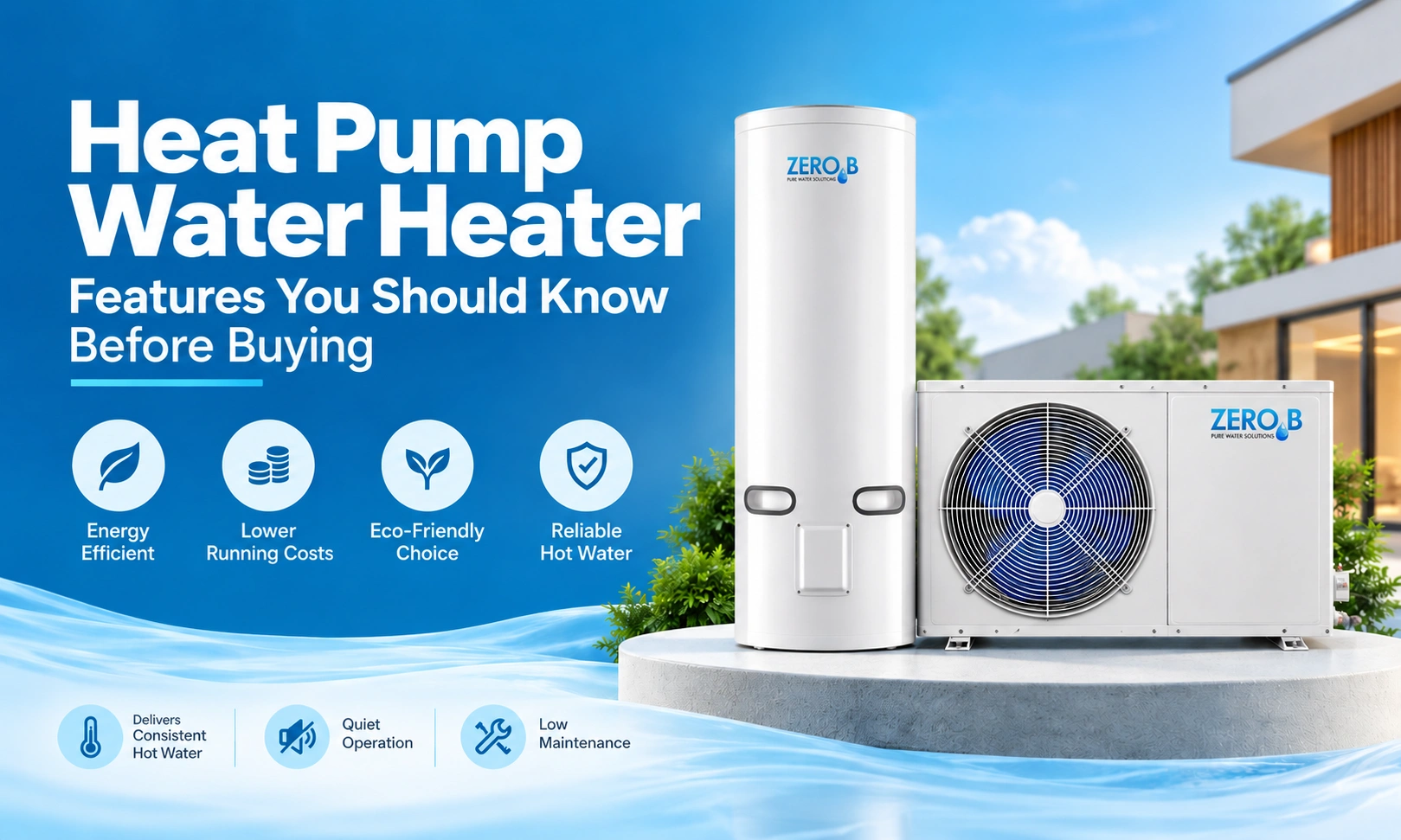
Heat Pump Water Heater Features You Should Know Before Buying

Heat Pump Water Heater Features India

Buying a water heater today means comparing far more than brand and price. The heat pump water heater features you choose, from COP rating to tank material to smart controls, decide how much you save on electricity and how well the unit performs through Indian summers and winters alike. Here’s exactly what to check before you buy.

What Features Should You Look For in a Heat Pump Water Heater?

Before comparing models, it helps to know which heat pump water heater features actually affect day-to-day performance and which are just marketing language. The list below covers the ones worth checking first:

  • Coefficient of Performance (COP): determines how many units of heat you get per unit of electricity consumed.
  • Tank capacity: 100L, 150L, 200L, or 300L+ depending on household size or commercial load.
  • Operating temperature range: how reliably the unit performs through your city’s coldest weeks.
  • Smart Wi-Fi controls: app-based scheduling, remote temperature setting, and energy monitoring.
  • Operating modes: Auto, Eco, Boost, and Holiday modes for different seasons and usage patterns.
  • Tank material: stainless steel or glass-lined inner tank, especially important in hard water areas.
  • Compressor warranty: a 5-year-plus warranty usually signals stronger build quality.
  • Noise level: measured in dB, relevant if the unit sits on a balcony or near living spaces.

What Heat Pump Water Heater Specifications Actually Matter?

Once you’ve shortlisted a few models, compare heat pump water heater specifications side by side rather than going by brand name alone.

Specification

Why It Matters

What to Look For

COP

Directly affects your monthly electricity bill

3.5 or above

Tank Capacity

Should match household hot water demand

100L (2-3 members), 200L (4-6 members), 300L+ (commercial)

Operating Temperature Range

Determines cold-weather performance

Down to 5°C or lower for North Indian cities

Refrigerant Type

Impacts efficiency and environmental impact

R32 or an equivalent low-GWP refrigerant

Power Supply

Confirms compatibility with home wiring

Single-phase 220V for most residential models

Compressor Warranty

Reflects build quality and after-sales confidence

Minimum 5 years

Tank Material

Affects lifespan in hard or corrosive water areas

Stainless steel or glass-lined inner tank

Noise Level

Matters for balcony or duct installations

40-55 dB range

What Is COP in a Heat Pump Water Heater?

COP, or Coefficient of Performance, is the number that tells you how efficiently a heat pump water heater turns electricity into hot water. In simple terms, it’s the ratio of heat delivered to electricity consumed: a COP of 4 means the unit produces four units of heat for every single unit of electricity it draws. A conventional electric geyser, by comparison, runs at a COP of 1, converting electricity into heat on a strict one-to-one basis. Among all the heat pump water heater specifications you’ll compare, COP has the single biggest impact on your running cost, so it’s worth checking before tank size, price, or even brand.

Read More: What Is a Heat Pump Water Heater? How It Works & Why It Saves Energy

Why a Smart / Wi-Fi Heat Pump Water Heater Is Worth Considering

A smart / wifi heat pump water heater adds a layer of control a conventional geyser simply doesn’t offer. Instead of manually switching the unit on and off, you manage temperature, scheduling, and modes from your phone, useful for households with irregular routines or properties managed remotely, such as a second home or guest house.

  • Remote temperature control and scheduling through a mobile app.
  • Real-time energy consumption tracking.
  • One-tap switching between Auto, Eco, Boost, and Holiday modes.
  • Maintenance and performance alerts sent directly to your phone.

Key Smart Features to Check Before You Buy

  • App compatibility with both Android and iOS.
  • A manual override in case of a network or app outage.
  • Multi-unit management, useful for hotels, hostels, or multiple properties.

What to Check Before Buying a Heat Pump Water Heater

A good spec sheet only tells part of the story. These practical checks are just as important as the features and specifications above:

  • Confirm the outdoor unit has 8-15 sq ft of ventilated installation space.
  • Match tank capacity to your household’s actual hot water usage, not your current geyser’s wattage.
  • Check the unit’s rated operating temperature against your city’s coldest winter weeks.
  • Verify tank material if your area has hard or corrosive water.
  • Ask about the local service network and technician availability before you buy.
  • Estimate the payback period using your local electricity tariff.
  • Confirm whether professional installation is included in the purchase price.

Best Heat Pump Water Heater Brands in India

When you’re comparing the best heat pump water heater brands in india, use the specifications covered above (COP, tank material, warranty, and service network) as your checklist rather than relying on brand name alone.

Brand

Known For

ZeroB

India-tuned Smart Heat Pump range with Wi-Fi controls and COP 3.5-4.5, built for household and commercial use across Indian climate zones

Racold

High-COP domestic models, up to 4.4

A.O. Smith

Wall-mounted HPW series with automatic defrost

Havells

Micro-channel heat exchanger models with a 7-year compressor warranty

Jaquar

Integra-X series with a double safety thermostat

Stiebel Eltron

German-engineered models with an inverter compressor

Read More: Heat Pump vs Solar Water Heater: Which One Should You Buy in 2026?

Choosing the Right Model for Your Home

The heat pump water heater features that matter most come down to a handful of numbers: a COP above 3.5, a tank size matched to your household, an operating range suited to your city’s winters, and smart controls that fit how you actually use hot water. Get these right, and brand, price, and warranty terms fall into place around a model built for your home.

Ready to Make the Switch?

Explore heat pump water heaters curated for Indian homes and budgets.

Frequently Asked Questions

The heat pump water heater features that matter most are COP (ideally 3.5 or above), tank capacity matched to household size, operating temperature range suited to your city’s winters, tank material (stainless steel or glass-lined for hard water areas), compressor warranty, and smart Wi-Fi controls for scheduling and monitoring. Check these before comparing brands or prices.
COP (Coefficient of Performance) is the ratio of heat delivered to electricity consumed. A COP of 4 means the unit produces four units of heat for every one unit of electricity used. A conventional electric geyser has a COP of 1. The higher the COP, the lower your running cost, so it’s the first specification to check.
Before buying, confirm the outdoor unit has enough ventilated installation space (8-15 sq ft), match tank capacity to your household’s daily hot water use, check the operating temperature range against your region’s coldest months, verify the tank material for your water quality, and ask about local service and installation support.
For most Indian households, a model with a COP of 3.5-4.5, an operating range down to at least 5°C, a stainless steel or glass-lined tank, and app-based smart controls covers year-round needs across Indian climate zones. ZeroB’s Smart Heat Pump range is built around these specifications for household and commercial use.
No. Wi-Fi connectivity is a convenience feature, not a requirement. The heat pump heats water on its set schedule and temperature even without an app connection. Smart controls simply add remote scheduling, mode switching, and energy monitoring on top of normal operation.
Most residential models need roughly 8-15 sq ft of ventilated space for the outdoor unit. A balcony, utility area, or bathroom duct is usually sufficient. Larger commercial installations may require more space depending on tank capacity and unit configuration.